What set them apart wasn't their ability to predict,
It was the one principle that kept them alive.
Before you read: keep just one thing in mind.
This piece traces the trading principles of 46 traders across different eras and markets — comparing them one by one, looking for what they all held as essential.
And from those principles, we chose exactly one indicator.
This isn't a piece recommending a specific trade. It's a research record — finding one common thread across different traders' principles, then testing it on real charts.
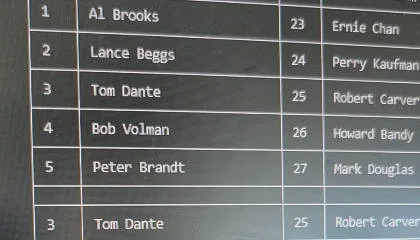
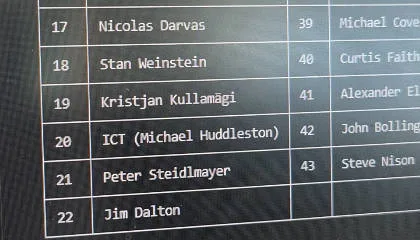
Forty-six people. All different.
We figured 46 different secrets
would come out.
Some read candlesticks. Some chase trends. Some sell options. Some run quantitative models. Finding common ground among people this different seemed like a stretch. So we didn't ask about methods. We asked for the one principle they never break.
Ask "How do you protect your money?"
Forty-six voices. One answer.
We distilled it to one sentence.
Define the loss first. Keep it small.
Profit comes after.
Spelled out: before you enter, you put a number on the worst-case loss. Then you cut it before it grows. How much you make is a separate question. Here's what they actually said.
Larry Hite
"The first question is how much you can lose — not how much you can make."
Larry Hite
"The most important thing is risk control. Every day, I assume every position I hold is wrong."
Paul Tudor Jones
"Define risk first. Profit is second. A trade without a stop loss is a car without brakes."
Mark Minervini
"Decide the stop first. Then back-calculate the position size."
Bruce Kovner
"Before you enter, define the maximum loss."
Van Tharp
"Cut losses. Let profits run. Keep bets small."
Ed Seykota
"Survival first. Profit second."
Robert Carver
"Cut losses small. Let profits grow."
Jesse Livermore
Different eras. Different markets. Different methods. But on how they handle losses — it reads as if one person wrote them all.
One of those 46 is Jack Schwager. Not known for his own trading — known for spending a lifetime hunting down and interviewing dozens of the world's best traders directly. In other words, he already did what we're trying to do. His conclusions were already sitting inside our data.
Jack Schwager
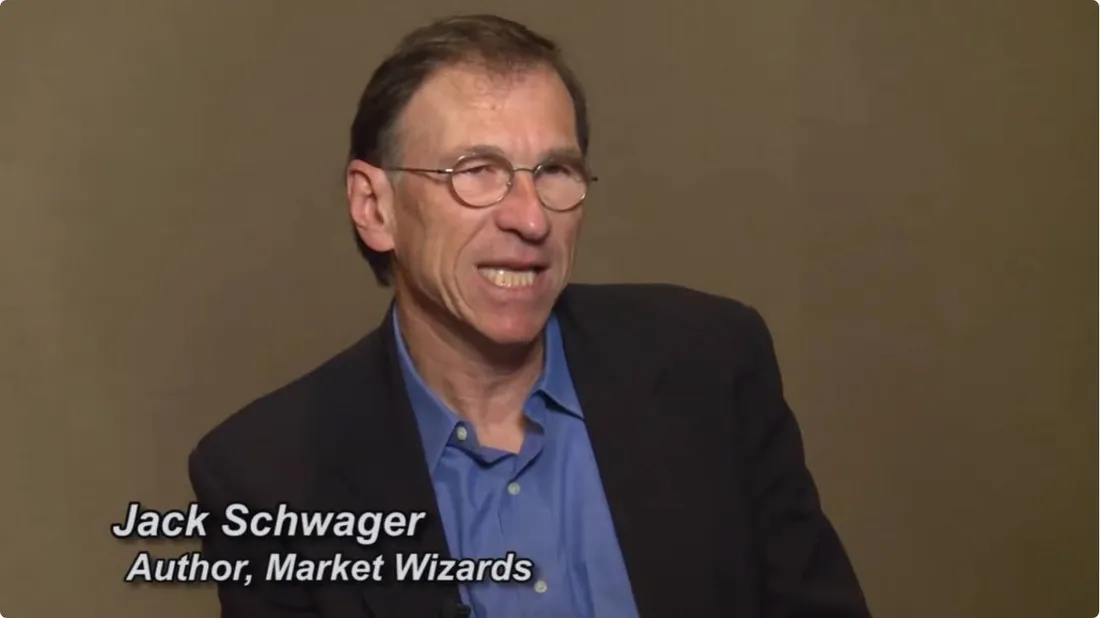
Methods may differ wildly. But risk management and consistency are the one thing every successful trader shares.
The longest survivors aren't the biggest earners. They're the ones who lose the least.
What matters is this: these patterns aren't a forced reading. The observer inside the data had already stated the exact same conclusion. We just confirmed it.
Of course, knowing their philosophy doesn't mean you can trade well. Their environment, education, and experience are different from ours. We can take their philosophy as a reference — but it's not a technique that could actually help us. So another question came up.
Is there an indicator that could make this possible?
I'd already trained the AI on over 400 indicators. Then I asked it to recommend just one — the single indicator that best puts the masters' philosophy into practice.
The indicator is free on TradingView. I ran over 24,000 backtests myself to verify it. Bitcoin, Ethereum, Solana, Apple, Nvidia, Nasdaq, Gold — 7 assets total — across timeframes from 15-minute to 4-hour, with real data going back 5 to 9 years.
Continue with research analyzed in-house by TVIEW LAB.
